Baby Panda's Daily Habits
- 3.5
- Rating
- 50.00M
- Installs
- Free
- Price
 Analysis by App-foxy
Helping a young child build everyday routines can be harder than explaining them once. A child may understand that hands should be washed or teeth should be brushed, yet still need a gentle, repeatable way to connect each action with a clear result. That is where Baby Panda's Daily Habits fits. I found it most useful as a small educational game for guided practice, not as a replacement for a parent, caregiver, or real bathroom routine.
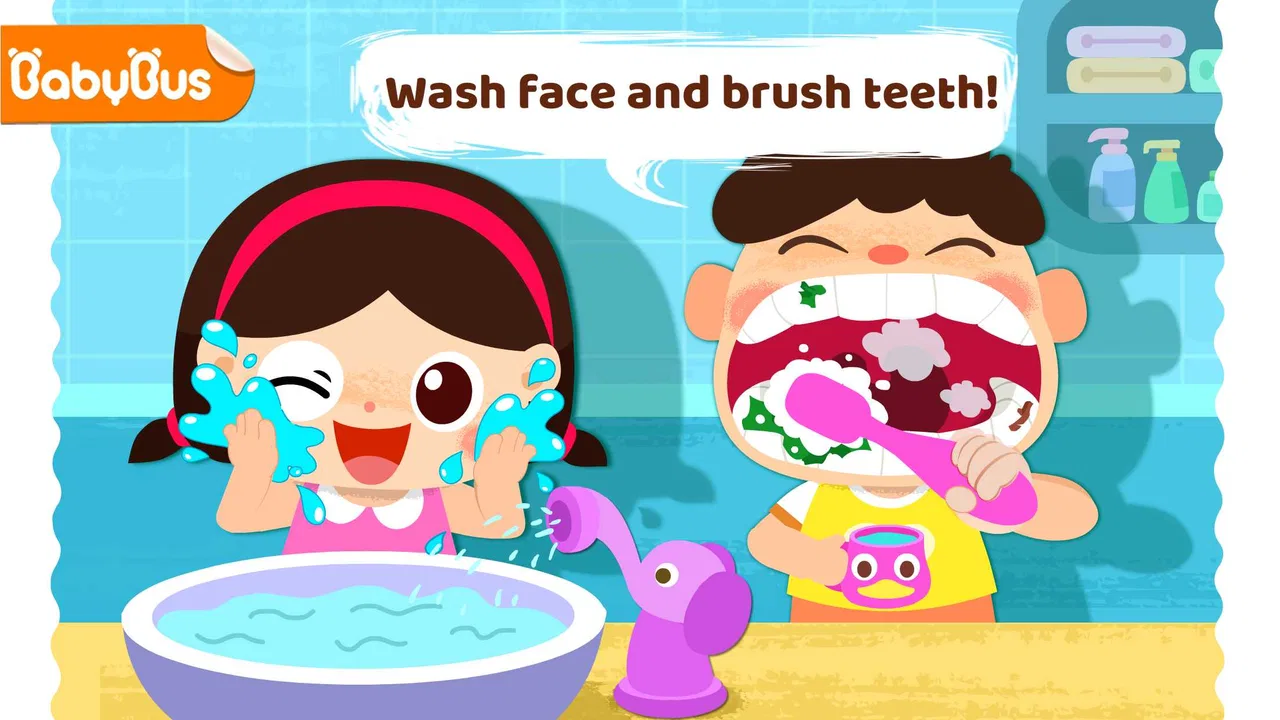
Created by BabyBus, this free game focuses on familiar self-care moments: using the toilet, brushing teeth, and washing hands. Those subjects make it immediately understandable for preschool children, while the game format gives them a reason to try the activities again. Its Everyone age rating also makes the tone accessible for a broad young audience, although very young children will still benefit from an adult sitting nearby and explaining how the virtual actions relate to real life.
The central experience is simple: the child chooses an everyday task, performs a sequence of actions, receives friendly feedback, earns a sense of completion, and can begin again. That cycle sounds modest, but it is exactly why the game can work as a short routine-building tool. It does not ask a child to memorize a long lesson. Instead, it turns a familiar habit into a series of manageable steps.
You May Also Like

 Blood Strike: 2.5 Anniversary
Blood Strike’s Loadouts Turn Every Drop Into a Tactical Gamble
A close look at Blood Strike’s custom loadouts: how fast access to signature weapons reshapes its battle royale rhythm, rewards preparation, and narrows the gap between fights.

 Pandora - Music & Podcasts
Pandora’s Music Is Easy to Start, but Harder to Recover
Pandora’s strength is its low-effort path from a seed to a station. Its weak spot is how much confidence it asks you to place in connection, setup, and quiet recovery.

 8 Ball Pool
 Is Built on Rivalries, Rematches, and Routine
A close look at the rivalries, rematches, shared routines, and unanswered safety questions that turn a quick pool match into a persistent mobile community.

 Samsung Music
’s Quiet Strength Is Playing What You Already Own
Its reach comes less from spectacle than from dependable access to a personal library. That simplicity is both the app’s strongest retention engine and its ceiling.

 AccuWeather: Weather Radar
AccuWeather Review: A Quick, Clear Forecast for Everyday Decisions
For everyday plans, the best forecast is the one you can understand quickly. AccuWeather makes rain timing, radar, and local conditions easy to act on, with a few trade-offs.

 Hill Climb Racing
Why Hill Climb Racing Still Turns Crashes Into One More Run
A tiny car, a bumpy hill and one more upgrade: Hill Climb Racing keeps resurfacing because its simple chaos makes every near-miss feel personal.
More From Our News Desk



How the daily-habit game turns routine into a repeatable loop
I look at the game’s routine as a small loop: a child tries a familiar self-care action, gets feedback, and reaches a clear stopping point before starting again. That structure is useful when I connect a brief play session to something happening at home, rather than leaving it as open-ended screen time. Next, I consider what a caregiver can do when the child’s attention or understanding falters.
The first action gives the child an easy way in
The strongest part of the design is that the first step feels approachable. A child does not need to understand a complicated menu or learn a set of rules before getting started. The activities are based on things children already see adults doing, so the game has a natural bridge to home life. I would introduce it by naming the real habit first, then letting the child explore the matching activity rather than handing over the device without context.
For example, before brushing teeth in the evening, a parent could let the child play the tooth-brushing activity briefly and then ask what the character did first. This makes the game a conversation starter. The useful connection is not simply that the child tapped the right place on screen, but that the child begins to recognize an order: prepare, carry out the action, finish, and move on.
The toilet-training theme deserves a little care. Children develop at different speeds, and a game cannot tell a caregiver whether a child is ready for toilet training. I see this section as a way to make the topic less unfamiliar, especially for a child who is curious or nervous. It should remain supportive rather than becoming a source of pressure. If a child resists the subject, forcing repeated play is likely to make the experience less helpful.
Hand washing is another area where the virtual activity can be useful before meals, after outdoor play, or after using the toilet. The child can rehearse the idea in a low-pressure setting, then repeat it at the sink. I would not treat the game as proof that the real-world habit has been learned. The real test is whether the child starts remembering the routine away from the screen.
One practical tip is to choose one habit at a time. Presenting all three topics in one sitting may turn a focused learning moment into random tapping. A short session connected to something happening that day usually has more value than a longer session with no real-life follow-up. The game works best when the first action on screen leads naturally to the same action in the bathroom.
Feedback keeps the child moving without making the lesson feel like a test
After the first tap, the game’s appeal comes from its response rhythm. The child performs an action, sees that the game has recognized it, and receives encouragement to continue. For a preschool player, that immediate response matters more than a detailed explanation. It tells the child, in a simple way, that the action belongs to the sequence.
I appreciate this approach because hygiene lessons can easily become corrective. Adults often say “you missed a spot” or “do it properly,” while a game can make practice feel safer. The child gets room to repeat an action without the embarrassment that may come from being corrected at the sink. That is especially helpful for children who become frustrated when they do not get a routine right immediately.
There is also a trade-off. Positive game feedback can confirm that an on-screen gesture was completed, but it cannot judge the quality of a real tooth-brushing session or whether hands were thoroughly cleaned. Parents should therefore use the feedback as motivation, not as a health assessment. A good follow-up is to ask the child to demonstrate the same habit with real objects and offer calm guidance where needed.
The feedback loop is most effective when the adult avoids interrupting every few seconds. I would let the child complete a small sequence independently, then discuss it afterward. This preserves the feeling of control while still giving the child a chance to connect the game with reality. If the child is stuck, a hint in everyday language—such as asking what usually comes next—can be more useful than taking the device away and doing the action for them.
Another non-obvious strength is that the game can reveal where a child’s understanding breaks down. A child may know that teeth need brushing but not understand that the task has several parts. If the child repeatedly pauses at the same point, that is a clue for the caregiver to explain that part during the real routine. In this way, the game is not only practice; it can also show which step needs more attention.
The reward is completion, not a substitute for real-world praise
Once a sequence is finished, the child gets the satisfying feeling of having completed a task. That reward is important because daily hygiene often has no dramatic payoff. Children may not immediately notice the benefit of clean hands or brushed teeth, but a game can make the short-term result visible and enjoyable.
I would keep the reward connected to the action rather than presenting it as the main reason to play. A useful phrase is, “You finished the routine—now let’s do it for real.” This keeps the screen from becoming the only place where the habit feels successful. Parents can also praise the child for remembering the next step, not just for reaching the end of the activity.
The free price makes it easy to try without committing money first. The game includes optional in-app purchases priced from $0.99 to $4.99 per item, so adults should be aware of that before allowing unsupervised play. For a child-focused app, I would review the purchase settings on the device and decide whether the child should have access to them. Even when the core activity is suitable, purchase prompts can interrupt the calm rhythm that makes a routine game useful.
The reward system may appeal most to children who enjoy repetition and visible progress. It may be less effective for a child who dislikes cartoon-style encouragement or prefers direct hands-on practice. In that case, a picture chart beside the sink, a parent demonstration, or a simple timer may be a better companion. The game is not automatically the best teaching tool for every personality.
My preferred use is a brief reward after a real habit, rather than a bargain that makes hygiene conditional. For instance, a child can wash hands at the sink, receive praise for doing so, and later play a short related activity. That order avoids teaching the child that brushing or washing only matters when a device is available.
Resetting the session gives repetition a purpose
The reason another session begins is not that the game contains a complex campaign. It is that daily habits themselves repeat. Toilet use, hand washing, and tooth brushing are not one-time achievements, so revisiting the activities can reinforce the idea that these actions belong to ordinary life.
Still, repetition needs structure. If I were using the game with a child, I would avoid leaving it open as background entertainment. I would start with a clear purpose, such as preparing for bedtime or talking about hand washing before lunch, and end by putting the device away. This gives the session a beginning and an end instead of turning it into an endless stream of taps.
The reset is also a chance to change the real-world context. One session might focus on brushing before bed; another might be followed by washing hands after playing outside. The same basic loop then feels relevant rather than repetitive. This is a useful way to prevent the child from memorizing only the screen actions while missing the broader habit.
For families with more than one child, I would give each child a turn rather than asking them to compete. Hygiene is personal, and competition can make a slower learner feel unsuccessful. The game’s educational value is stronger when children can observe one another calmly and talk about the steps. An adult can turn the reset into a quick question: what did the character do, and when do we do that at home?
There is a practical device consideration too. The game requires Android 6.0 or later, so it is worth checking compatibility before planning to use it on an older phone or tablet. The current version is 8.75.00.01, which identifies the build available at the time of this review. I would also test the app myself before handing it to a child, not because the activities are difficult, but because a parent should know where the child may need help and where optional purchase prompts might appear.
Where it fits beside ordinary alternatives
Compared with a storybook about hygiene, this game offers more direct participation. A book can explain a routine beautifully, but the child usually listens and turns pages. Here, the child takes actions and receives immediate responses. That makes the game a stronger choice when the goal is rehearsal rather than storytelling.
Compared with a video, the interactive format gives the child more control. A video can demonstrate brushing or washing, but the child may simply watch passively. This game encourages the child to participate in the sequence. The limitation is that a video or live demonstration may show real movements more accurately, especially for brushing technique. I would choose a real demonstration when the child needs to learn physical detail, and use the game when the child needs motivation to think through the order.
Compared with a reward chart, the game is more engaging at the moment but less visible in the home. A chart on the bathroom wall reminds everyone about the routine without requiring a device. It can also track real behavior more directly. The game is better for introducing or rehearsing the idea; the chart may be better for maintaining it over many days.
Compared with a parent’s explanation, the game is less flexible. A caregiver can adapt instantly to a child’s fears, questions, or developmental stage, while the app follows its own presentation. That is why I would not use it as the only resource for toilet training or oral care. Its best role is as a friendly extra layer between explanation and practice.
Who will enjoy it, and who should choose something else
I think this educational game is a good match for preschool children who respond to colorful interaction, need repetition, or are beginning to talk about personal care. It can also help a caregiver introduce a sensitive topic in a less intimidating way. Families looking for a free starting point will find the price approachable, while the large install base—over 50 million—shows that this type of BabyBus experience has reached many households.
The average rating is 3.5 from around 17 thousand ratings, with about 95 written reviews. I would read that as a reason to set realistic expectations rather than as a simple yes-or-no verdict. The concept is accessible, but individual children will differ greatly in how much they enjoy the presentation and how useful the repetition feels.
I would skip it when the child is already independent with these habits and needs more advanced educational content. I would also choose another option if the family wants detailed dental instruction, a robust routine tracker, or a completely screen-free approach. Children who become fixated on rewards may be better served by a physical chart and direct praise. Likewise, a child who becomes upset by toilet-related themes should not be pushed through the activity simply because it is available.
Adults should remain involved for younger players. The age rating is Everyone, but that does not mean every child can navigate it or interpret the lesson alone. A caregiver can keep the session short, connect each activity to a real moment, and notice whether the child is learning a habit or merely chasing the next response. That small amount of guidance makes a substantial difference.
My verdict on the action-feedback-reward-reset loop
Baby Panda's Daily Habits succeeds when it is treated as a rehearsal tool. The child starts with a recognizable action, receives quick feedback, reaches a satisfying completion point, and returns because the real habits happen again every day. That loop is clear enough for young players and practical enough for parents who want a gentle way to begin a conversation about hygiene.
Its limits are just as clear. The game cannot replace a sink, toothbrush, toilet-training support, or an adult’s judgment. Its rewards can motivate practice, but they should not become the only reason a child follows a routine. Optional purchases also make supervised use the sensible choice, particularly for children who can navigate a device independently.
My recommendation is to use it in short, purposeful moments: play one relevant activity, talk about the steps, then follow with the real habit. Used that way, the game offers more than a basic cartoon distraction. It gives children a low-pressure place to rehearse everyday actions and gives adults a useful opening for teaching them. For families seeking a playful introduction to children’s hygiene routines, it is worth trying, provided the screen remains a bridge to real-life practice rather than the destination.
FAQs for Baby Panda's Daily Habits
01What is Baby Panda’s Daily Habits app about?
Baby Panda’s Daily Habits is an educational app designed for young children to learn and establish healthy daily routines. Through interactive activities like brushing teeth, washing hands, and dressing, kids can develop good habits in a fun and engaging way. The app uses vibrant graphics and simple instructions to keep children entertained while learning.
02Is Baby Panda’s Daily Habits safe for young children?
Yes, Baby Panda’s Daily Habits is specifically designed with young children in mind. It features age-appropriate content and activities that are both safe and educational. The app does not contain any inappropriate material and is free of ads, ensuring a safe environment for kids to explore and learn.
03Does Baby Panda’s Daily Habits require internet access?
No, Baby Panda’s Daily Habits can be used offline after the initial download. This makes it convenient for parents who wish to keep their children entertained and educated on the go, without needing an internet connection. However, an internet connection may be required for updates or additional content downloads.
04Can parents track their child’s progress in the app?
While Baby Panda’s Daily Habits provides a range of activities for children to engage in, it does not offer a specific feature for parents to track progress. The focus of the app is more on interactive play and learning rather than progress tracking, encouraging children to explore at their own pace.
05What platforms is Baby Panda’s Daily Habits available on?
Baby Panda’s Daily Habits is available on both Android and iOS platforms. Parents can easily download the app from the Google Play Store or Apple App Store, making it accessible for a wide range of devices. The app is optimized for both smartphones and tablets, ensuring a smooth user experience on any device.
Pros
- Engaging and educational activities.
- Colorful and child-friendly graphics.
- Simple interface for young kids.
- Encourages healthy daily routines.
- Regular updates with new content.
Cons
- May require in-app purchases.
- Limited content in free version.
- Occasional ads can interrupt play.
- Requires internet for some features.
- Not suitable for older children.

Baby Panda's Daily Habits
Gallery